
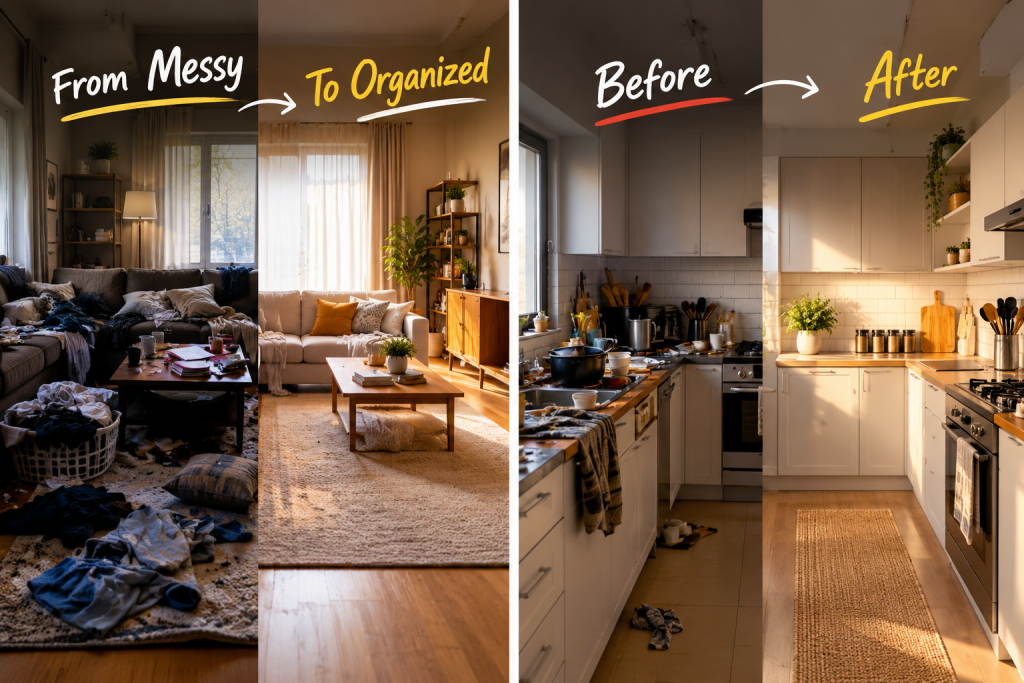
Walking into a messy house can feel overwhelming, especially when clothes are scattered around, kitchen counters are covered with items, and things seem to have no proper place. You may want to clean everything at once, but that often makes the task feel even more difficult.
The good news is that you don’t need to organize your entire home in one day. With a simple plan, a little patience, and the right home organization tips, you can turn a cluttered space into a clean, comfortable, and organized home.
If you’re wondering how to start organizing a messy house, these practical steps will help you get started without unnecessary stress.
1. Start Small and Choose One Area
One of the biggest mistakes people make when organizing a messy home is trying to tackle every room at the same time. This can quickly become exhausting.
Instead, choose one small area to begin with. It could be your bedside table, kitchen counter, bathroom shelf, or a single corner of your living room.
Focus on completing that area before moving to another. Seeing a small space become organized gives you a sense of progress and makes it easier to continue.
Helpful tip: Set aside 15 to 20 minutes to work on one area. Short organizing sessions are easier to maintain than trying to finish everything in one afternoon.
2. Declutter Before You Organize
Before buying storage baskets or rearranging furniture, take time to declutter your home. Organizing items you no longer use only creates more work later.
Go through your belongings and separate them into three groups:
- Keep: Items you use regularly or genuinely need.
- Donate or give away: Items in good condition that someone else could use.
- Discard: Broken, damaged, or unusable items that cannot reasonably be repaired or recycled.
Be honest about what you need. If you have clothes you haven’t worn in years or kitchen gadgets collecting dust, consider whether they deserve the space they occupy.
Decluttering is one of the most effective ways to create a clutter-free home because it reduces the number of things you need to store, clean, and maintain.
3. Clean and Organize One Room at a Time
Once you’ve removed unnecessary items, focus on cleaning and organizing each room.
Start with the areas you use most often. For example, a tidy kitchen makes cooking easier, while an organized bedroom can make your daily routine more comfortable.
A practical order might be:
- Bedroom: Make the bed, organize clothes, and clear bedside tables.
- Living room: Remove unnecessary items, arrange cushions, and organize books or remote controls.
- Kitchen: Clear countertops, group similar utensils, and organize pantry items.
- Bathroom: Dispose of expired products and arrange toiletries neatly.
Complete one room before moving on whenever possible. This helps prevent items from being moved repeatedly from one place to another.
4. Give Everything a Proper Place
A common reason homes become messy is that everyday items don’t have designated storage spaces.
Keys end up on the dining table, shoes gather near the doorway, and chargers disappear under piles of belongings. Creating a specific place for frequently used items can make a noticeable difference.
Use drawer organizers, storage baskets, shelves, hooks, and labeled containers where they are genuinely useful.
For small homes, consider vertical storage solutions such as wall shelves and hooks. These help maximize storage space without taking up too much floor area.
Remember that an organized home doesn’t need expensive storage products. Reusing boxes, baskets, and containers you already own can be just as effective.
5. Make the Most of Your Available Space
If you live in a small apartment or have limited storage, thoughtful organization becomes even more important.
Look for unused spaces that could serve a practical purpose. The area under your bed, the back of a door, and empty wall sections may provide additional storage opportunities.
Here are a few simple home organization ideas:
- Store seasonal clothes in clearly labeled containers.
- Use drawer dividers to separate smaller belongings.
- Keep frequently used kitchen items within easy reach.
- Store similar items together to make them easier to find.
- Avoid filling every shelf and cupboard to its maximum capacity.
Leaving a little breathing room in storage areas makes it easier to return items to their proper places.
6. Create a Simple Daily Cleaning Routine
After putting in the effort to organize your home, the next step is keeping it that way.
You don’t need to spend hours cleaning every day. Small, consistent habits can prevent clutter from building up again.
Try making your bed each morning, washing dishes after meals, returning items after use, and putting dirty clothes in a laundry basket instead of leaving them on the floor.
You can also spend 10 to 15 minutes each evening resetting your main living spaces. Put away loose items, clear surfaces, and prepare the areas you’ll need the following morning.
These simple cleaning habits make maintaining an organized home much easier over time.
7. Avoid Trying to Make Everything Perfect
It’s easy to compare your home with perfectly arranged rooms on social media. However, a real home is meant to be lived in, and it won’t look spotless every minute of the day.
Your goal should be to create a space that works for your daily life, not one that requires constant effort to maintain.
If your home is still messy after your first organizing session, don’t be discouraged. Progress takes time, particularly when you have years of accumulated belongings to sort through.
Celebrate small improvements and adjust your organization system whenever something isn’t working.
8. Build a Weekly Home Organization Plan
A simple weekly plan can help you stay consistent without making household chores feel overwhelming.
For example:
- Monday: Organize the bedroom.
- Tuesday: Clean and declutter the kitchen.
- Wednesday: Tidy the bathroom.
- Thursday: Sort laundry and wardrobes.
- Friday: Reset the living room.
- Saturday: Tackle one cluttered area.
- Sunday: Prepare your home for the coming week.
You can change this schedule to suit your lifestyle, household size, and available time. The important thing is to create a routine you can realistically follow.
9. Get Everyone in the Household Involved
Organizing is much easier when you don’t do it alone. If you live with family, roommates, or siblings, explain your plan and give everyone a small, clear job. One person can handle the dishes, another can sort laundry, and kids can put toys back in their baskets. Agree on where common items belong so nobody has to guess. When everyone follows the same system, clutter has a harder time coming back. A little encouragement also goes a long way, so thank people for their effort and celebrate the finished rooms together.
Final Thoughts: Start Organizing Your Home Today
Learning how to organize a messy house doesn’t require a complete makeover or expensive storage solutions. It starts with small decisions, from clearing one surface to letting go of items you no longer need.
Begin with one area, declutter before organizing, create a home for everyday belongings, and develop simple habits that prevent clutter from returning.
You don’t have to finish everything today. Even 15 minutes of focused effort can make a difference.
Ready to transform your home? Choose one cluttered area right now, set a timer for 15 minutes, and start organizing. Your journey toward a cleaner, more peaceful, and clutter-free home begins with that first step.