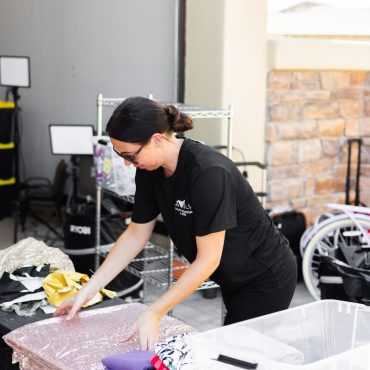
Professional organizers walk into a chaotic home and leave it calm in a day or two. It looks like magic, but it’s really a method. They use the same steps every time, whatever the room or the budget.
These professional organizer tips will help you do the same in your own home. You don’t need special tools, just a clear order of steps.
1. Begin With an Honest Walkthrough
Before touching anything, a pro walks through the whole house and takes notes. Where does clutter collect? What do you struggle to find? Which spots annoy you daily?
Do the same. Write down the top three problem areas and start with the one that affects your day the most.
2. Empty the Space Completely
Professionals never organize around the mess. They take everything out of a drawer, shelf, or closet and put it on a clean surface. Seeing it all at once shows you how much you really own, and it’s often more than you expected.
Wipe the empty space before anything goes back. It’s a small step that makes the result feel fresh.
3. Declutter With Clear Rules
A good organizer makes quick decisions using simple rules. Sort every item into four groups: keep, donate, relocate, and trash. Then ask:
- Have I used this in the last year?
- Do I like it or need it?
- Do I own duplicates?
- Does it belong in this room?
If it fails these questions, let it go. Removing clutter is the most important step, because fewer things mean less to organize.
4. Sort by Categories
Pros group similar items together before choosing where they go. All your batteries in one place, all your towels in another, all your documents in a third.
Categories show you what you have, stop you from buying duplicates, and make storage choices easier. Skip this step and you’ll end up with scattered items across the house.
5. Create Zones
A home works better when each area has a purpose. Think of zones: a coat zone by the door, a homework zone at the table, a cleaning zone under the sink, a charging zone in the kitchen.
Store things where you use them, not where it looks neat. Keep everyday items at eye level and rarely used ones on high shelves or in the back.
6. Pick Containers Last
This is a rule pros repeat constantly: never buy containers first. Declutter, sort, and measure the space, then decide what you need.
Good options include:
- Clear bins so you can see what’s inside
- Drawer dividers for small items
- Baskets for soft items like blankets and toys
- Shelf risers and hooks for extra space
Measure every shelf before you shop. Containers that don’t fit become more clutter.
7. Label Everything
Labels keep a system working long after you’ve finished. A simple label maker, masking tape, or marker is enough. Keep wording short and specific, like “Chargers,” “Baking supplies,” or “Winter scarves.”
Labels help everyone in the home, kids and guests included, put things back where they belong.
8. Make It Easy to Maintain
A professional doesn’t design a system that takes effort to keep up. Put frequently used items in easy-to-reach spots and keep rarely used items higher or further back. If putting something away takes more than a few seconds, you won’t do it.
Use open baskets for daily items and closed boxes for seasonal ones.
9. Build Simple Habits
Even the best system fails without habits. Pros teach clients small, repeatable actions:
- Daily reset: Spend ten minutes each evening putting things back.
- One in, one out: When something new arrives, something old goes.
- Weekly tidy: Clear surfaces and sort the mail on a set day.
- Monthly check: Review one room or drawer for things you no longer need.
Consistency beats perfection. Small daily actions keep a home organized far better than a big cleanup every few months.
10. Know When to Ask for Help
Professionals work in teams for a reason. If you live with family, give everyone a job. If the mess feels too big, a friend or a one-time session with a hired organizer can get you started.
Asking for help is a smart move, not a failure.
Mistakes to Avoid
- Shopping before sorting. Always declutter first.
- Doing the whole house at once. Work one zone at a time.
- Keeping “just in case” items. If you haven’t used it in a year, let it go.
- Ignoring your daily habits. Build a system that fits how you actually live.
- Aiming for perfect. A home that works for you is the goal.
Quick Checklist
- Walk through and list problem areas
- Empty one space completely
- Declutter into four groups
- Sort by category
- Create zones
- Measure, then buy containers
- Label everything
- Keep daily, weekly, and monthly habits
Final Thoughts
Learning how to organize your home like a professional is about following a method, not owning fancy products. Empty the space, declutter, sort, create zones, choose containers last, label, and keep simple habits.
Start with one drawer or shelf today. For more detail, read our guide on how to organize your house room by room, or our tips on how to be more organized at home.